The Nervous System is the part of a human or animal that regulates its actions and sensory information by transmitting signals between different parts of the body. Many will refer to it as the body’s electrical wiring because of the way it uses electromagnetic waves to communicate between cells.
When it comes to the functionality, the nervous system is often split into two main sections: The involuntary component and the voluntary component. The involuntary component regulates the body processes that we might consider automatic, such as blood pressure and the breath rate. The voluntary system, as indicated in the name, controls voluntary movements such as those in the skin, bones, joints, and skeletal muscles. Now we’ll look more at how this system is divided structurally, but first, let’s explain what is happening on a cellular level.
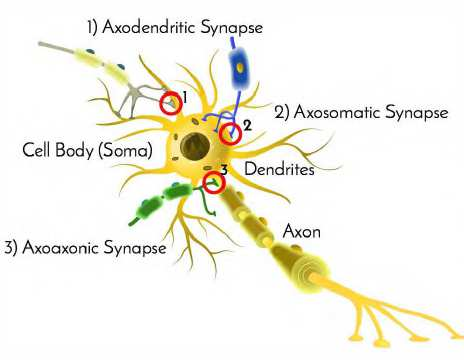
Within the nervous system is the presence of a special type of cell called a neuron. Neurons, also known as nerve cells, send signals to other cells in the form of electrochemical waves. These waves travel along thin fibers within the body and cause chemicals to be released at junctions called synapses.
These released chemicals are referred to as neurotransmitters. A cell that receives a synaptic signal
from a neuron can be stimulated to act in a certain way, depending on what is needed at that moment.
Let’s take a basic movement like lifting your arm, for example, to properly explain this process. All you know is that you want to lift arm up.
That thought to lift your arm up is the first step in the process. However that thought takes place in the brain, so how is it that the instruction reaches down to the muscle in your arm? Well, the neurons take over from here. These single nerve cells, called motor neurons are the way in which the brain connects to the muscles. A motor neuron is fired and the electrochemical wave is sent out along the thin fibre (axon) we mentioned. As is reaches the junction to the muscle (synapse), a chemical is released (neurotransmitter). When the chemical hits the muscle, the muscle will react, and in this case, your arm will lift. This whole process is happening in a moment of time so short, that it seems instant.
As well as motor neurons, you also have what are called sensory neurons which in a sense work in a reverse fashion. These neurons react to being physically stimulated, by touch, heat, light, and sound for example, and transmit information back to the nervous system about the surrounding environment. A basic is example of this is when you touch a hot object, the nerve cells in your hand will fire a message to the brain using those sensory neurons. At which point the brain will fire back a message telling that hand to pull away from the harmful heat.
Structurally now, the nervous system is often divided into two parts as shown below. This is the central nervous system, and the peripheral nervous system.

As we can see above, the central nervous system is made up primarily of the brain, spinal cord and nerves. Interestingly enough, the brain and spinal cord are encased in bone, perhaps indicating their importance. The peripheral nervous system consists of ganglia, which are essentially clusters of neurons and nerves that connect to the central nervous system as well as each other. On a simple level, think of the Central Nervous System as the command centre, in which all decisions are made, whilst the peripheral system are like the informants, sending information back to the CNS and receiving constant instructions.