
Circadian Rhythms are essentially the cycles and changes that the body goes through during a 24 hour period. These changes can often be connected with the environment and a good example of this is the sleep/wake cycle. The body reacts to how much light it is receiving, sending signals to the brain so that your whole system can respond appropriately. So, for example, at night time, when there is less light, you will tend to get tired or sleepy, and during the day, you should be more alert.
So your Circadian rhythms are highly dependent on the natural sunlight your body is receiving, particularly through your eyes. How much of this sunlight is being receives is key to determining the when certain hormones and neurotransmitters are released in order to set your body’s daily rhythms. This goes to support, that our behaviours and habits should be made, if possible, to match the natural rhythm of nature. A body should ideally be sleeping at night, and awake and alert when the sun is shining.
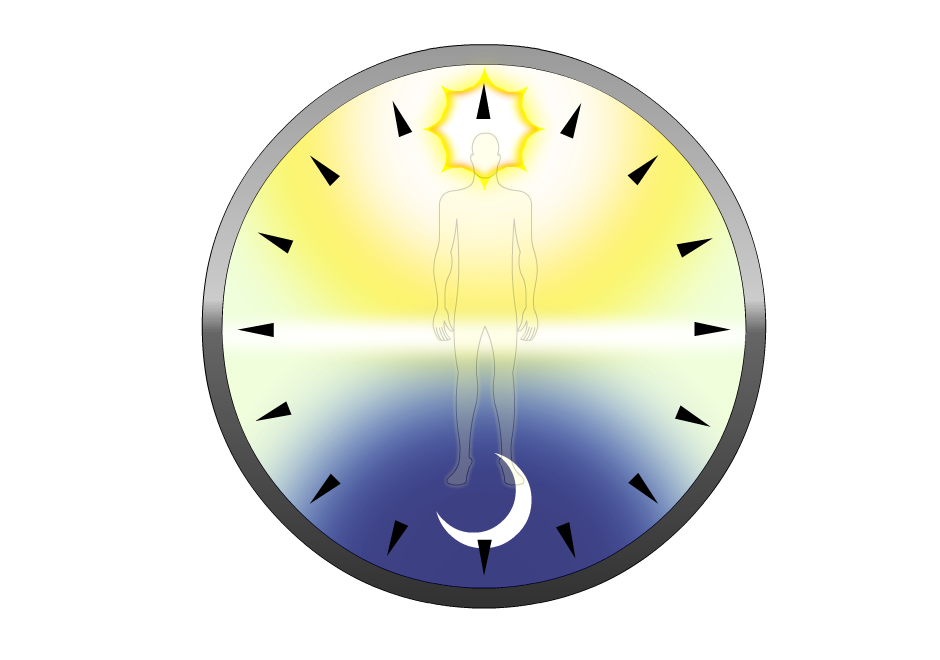
To be more precise on what is taking place, for example, your body will being to secrete melatonin in the night time, which will promote healthy sleeping. This secretion will cease during daytime hours, providing you are in tune. Your body temperature also adjusts as it is lower when you are sleeping and rises when you’re awake. There are other changes that occur throughout the day.
It is your biological clock which regulates these rhythms, with this clock essentially being made up of proteins that interact with the cells throughout your body. If your biological clock is thrown off, this can account for you feeling like your body is not in tune with your environment. A good example of this is jet lag. When your body passes through a different time zone, your biological clock will then be different from local time. If for example, you live in the United Kingdom, London, and you fly to New York in the USA, then your biological clock will be about 5 hours ahead local time when you first arrive. It may be the evening time, but your body will feel like it’s night time. It will take, usually, a couple of days for the body to adjust to your new time zone.
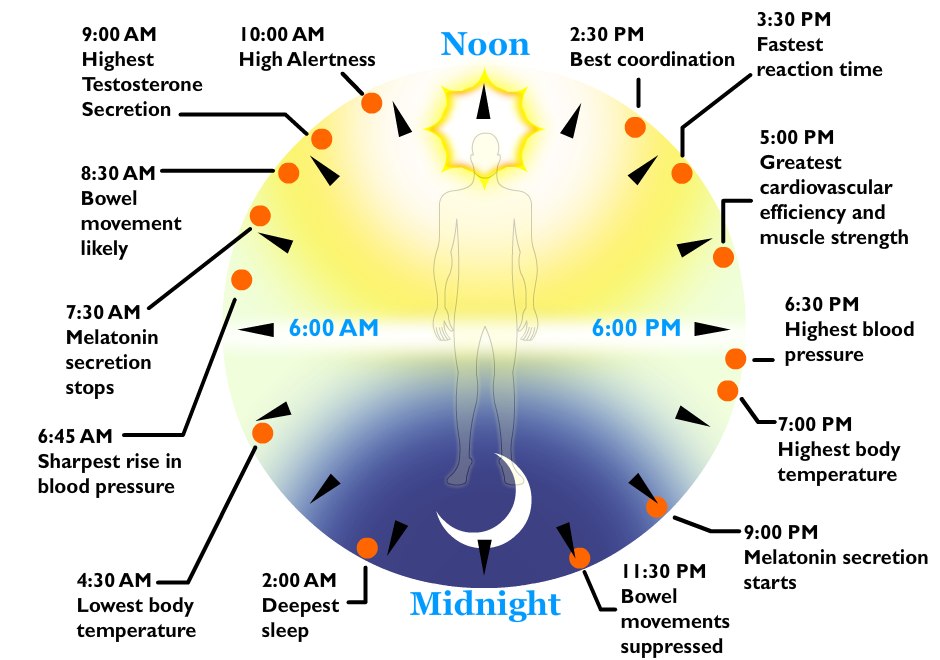
Let’s take a look at the diagram below, to gain an idea of what is taking place in our body at different times during the day
There are other things that can affect your rhythm as well as the environment. Age is one, and people of different ages tend to have different rhythms and sleeping hours. Another thing may also be your life choices and habits, as well as your work hours.
